
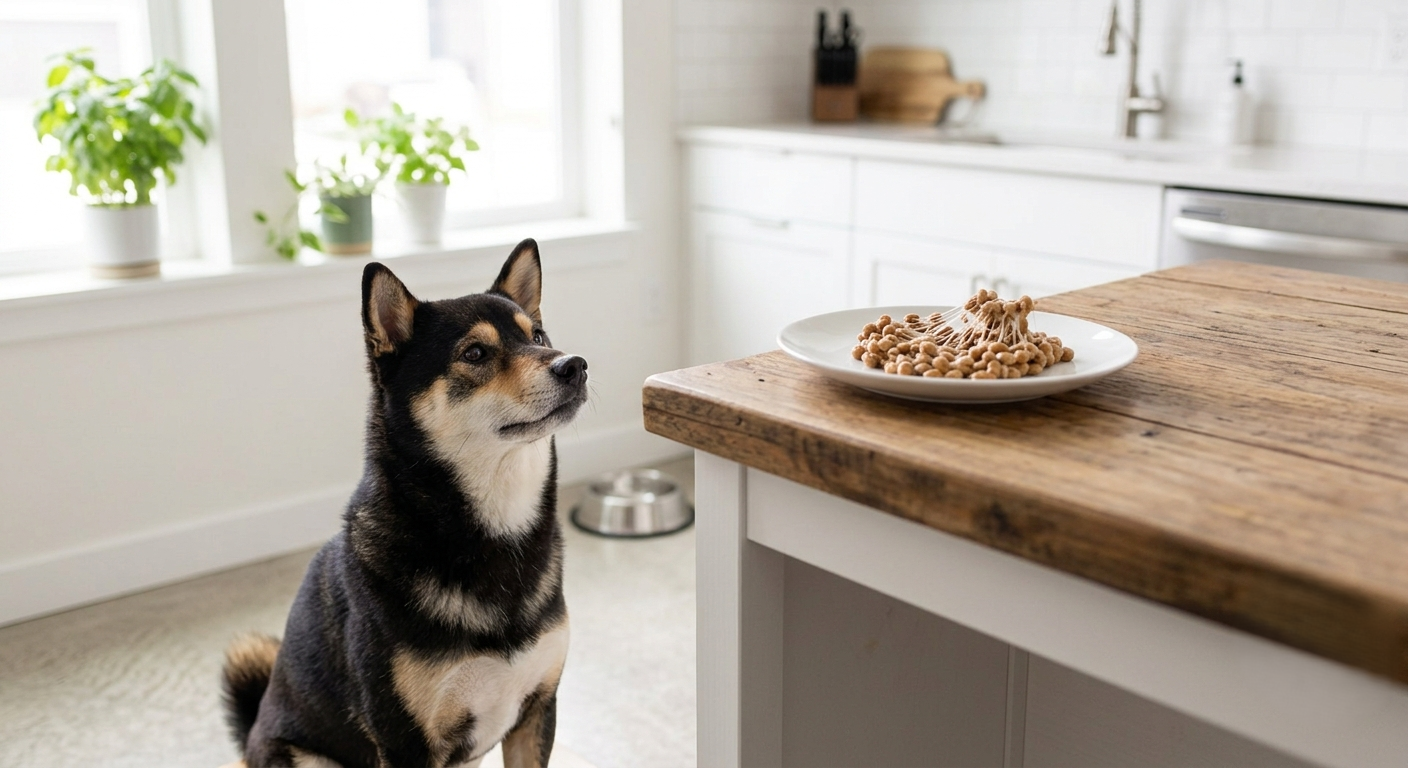
Natto—the traditional Japanese staple made from fermented soybeans—is celebrated for its remarkable probiotic content and health benefits in humans. But if you are enjoying this nutrient-dense dish at home, you might wonder: can dogs eat natto?
The short answer is yes, dogs can safely eat plain, unseasoned natto in small quantities. Thanks to its unique fermentation process, natto contains a powerful enzyme called nattokinase and beneficial bacteria that support canine digestion. However, because of its distinct texture, intense aroma, and potential seasoning traps, it must be offered with care. Here is everything you need to know about feeding natto to your dog safely.
🛑 Key Takeaways: Natto Safety for Dogs
- Safe & Non-Toxic: Plain natto contains no toxic ingredients for dogs and offers exceptional probiotic and enzymatic benefits.
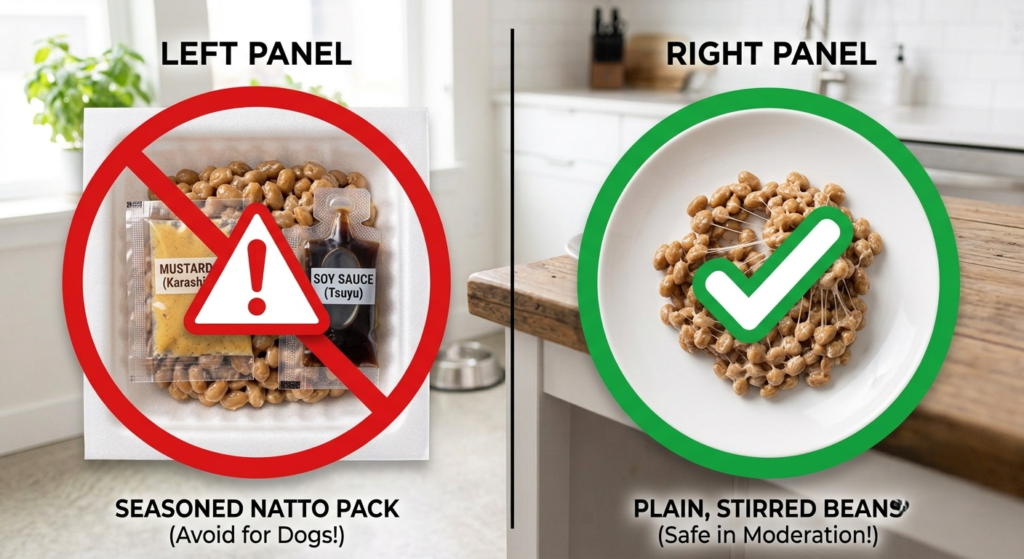
- Skip the Flavor Packets: Never feed your dog natto mixed with the included mustard (karashi) or soy sauce (tsuyu) packets, as they contain high sodium, spices, and potential toxins.
- Supports Gut and Circulatory Health: High in nattokinase, Vitamin K2, and natural probiotics, plain natto aids digestion and heart health.
- Introduce Gradually: The strong fermented aroma and sticky, fibrous texture can be off-putting or cause mild stomach upset if introduced too quickly.
What Is Natto and Why Is It Unique?
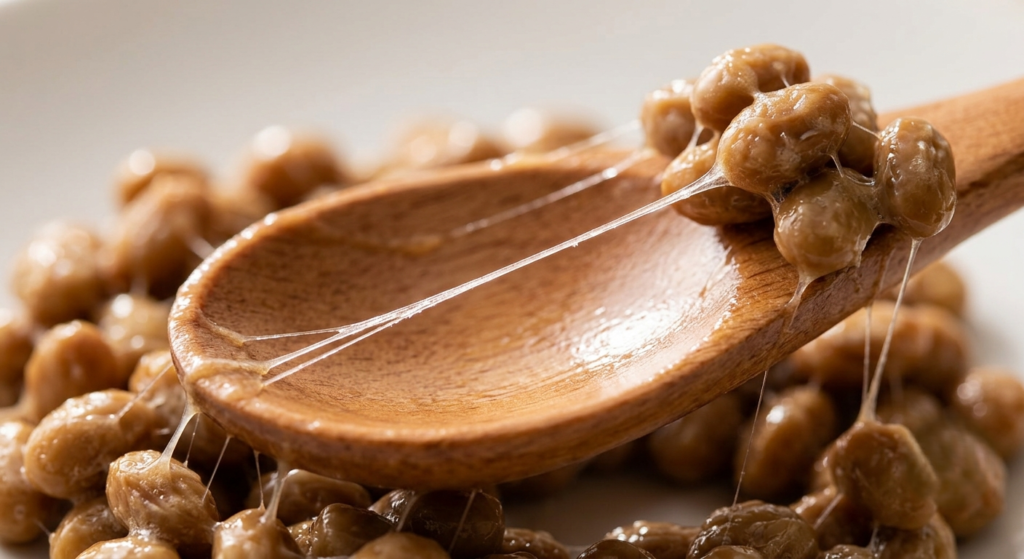
Natto is created by fermenting boiled soybeans with the bacterial strain Bacillus subtilis var. natto. This fermentation process transforms the beans, creating a stringy, sticky mucilage (fibrous web) and producing a deep, earthy flavor and aroma.
Unlike raw or plain boiled soybeans, the fermentation process breaks down complex plant proteins and anti-nutrients (like phytic acid), making natto significantly easier for a dog’s digestive system to absorb.
Plaintext
  +-------------------------------------------------------------------+
  |                  TOFU vs. TEMPEH vs. NATTO FOR DOGS               |
  +-------------------------------------------------------------------+
  | Tofu:      Unfermented soy milk | Basic plant protein | Low fiber |
  | Tempeh:    Fermented whole soy  | High protein & fiber| Dense block|
  | Natto:     Bacterial fermented  | Probiotics & Enzymes| Sticky web|
  +-------------------------------------------------------------------+
Nutritional Benefits of Natto for Canines
When given as an unseasoned snack or meal topper, natto provides several impressive health benefits for dogs:
1. Rich in Nattokinase Enzyme
Natto is the sole source of nattokinase, a natural enzyme produced during fermentation. Research shows nattokinase supports healthy blood circulation, helps break down fibrin, and promotes cardiovascular wellness.
2. Powerful Probiotic Support
The Bacillus subtilis bacteria strain survives stomach acid efficiently, helping balance your dog’s gut microbiome, improve stool quality, and enhance nutrient absorption.
3. High Source of Vitamin K2 (Menaquinone-7)
Natto is one of the richest natural dietary sources of Vitamin K2, which works synergistically with calcium to support strong bone density and cardiovascular health in aging dogs.
Dangers and Precautions: When Is Natto Unsafe for Dogs?
While plain natto itself is safe, feeding it improperly can lead to health hazards:
1. Included Flavor Packets (Major Danger)
Commercial natto styrofoam packs almost always include two condiment packets:
- Soy Sauce / Tsuyu Dashi: High in sodium and often contains onion/garlic extract or mirin (alcohol).
- Japanese Mustard (Karashi): Causes severe oral irritation, stomach inflammation, and vomiting in dogs.
Rule of Thumb: Always discard both sauce packets immediately before preparing natto for your pet.
2. High Fiber & Gastrointestinal Upset
Feeding too much natto at once can trigger gas, bloating, or diarrhea due to the sudden surge of fermented fiber and active bacteria.
3. Sticky Choking Risk for Small Breeds
The sticky, stringy texture can sometimes cling to the roof of a dog’s mouth. Mixing a small spoon into wet food or kibble helps ensure smooth swallowing.
Recommended Portion Sizes for Dogs
Natto should only be served as an occasional functional topper (10% or less of daily calories).
| Dog Size | Weight Category | Max Serving Size (Plain Natto) | Recommended Frequency |
| Small | Under 20 lbs (9 kg) | 1/2 teaspoon | 1–2 times per week |
| Medium | 20–50 lbs (9–23 kg) | 1 teaspoon | 1–2 times per week |
| Large | Over 50 lbs (23+ kg) | 1 tablespoon | 1–2 times per week |
Step-by-Step: How to Safely Serve Natto to Your Dog
- Buy Plain, Unflavored Packs: Select standard organic natto from your local Asian market or grocery store.
- Discard All Sauce Packets: Immediately throw away the mustard and tsuyu packets.
- Whip/Stir Lightly: Stir the beans 20–30 times with a fork to activate the beneficial sticky mucilage and nattokinase.
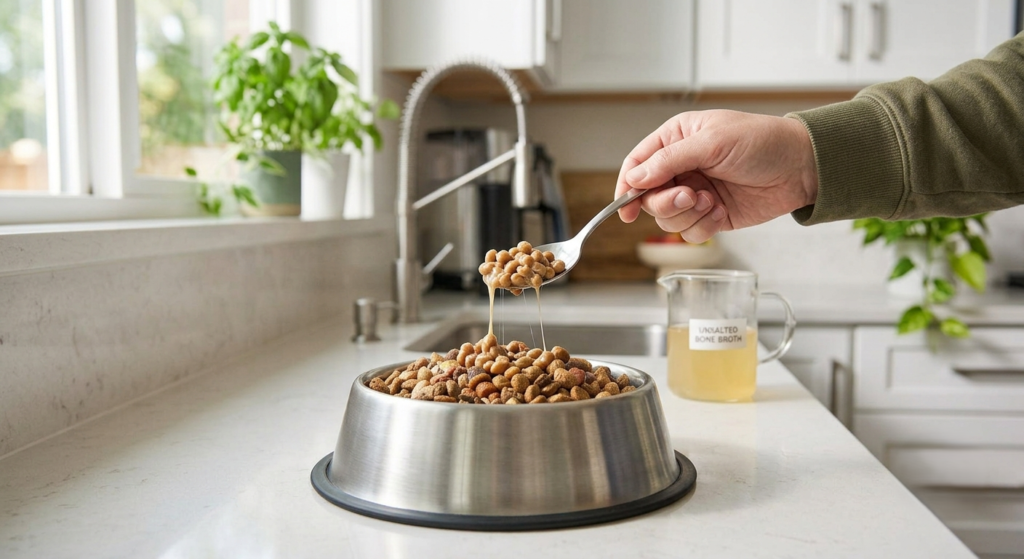
- Mix into Regular Kibble: Mix the recommended portion directly into your dog’s regular food to balance the strong smell and texture.
- Observe for Any Allergic Reaction: Watch for any signs of soy allergy, such as excessive itching or red skin.
Frequently Asked Questions (FAQs)
Can dogs eat natto every day?
It is best served 1 to 2 times a week as a functional probiotic topper rather than a daily staple, ensuring your dog’s primary nutrition comes from balanced pet food.
What if my dog accidentally ate natto with the soy sauce packet?
A single lick of the diluted sauce packet is unlikely to cause severe harm in a large dog, but keep fresh water available. If a small dog consumed the full soy sauce packet or mustard, monitor closely for vomiting, abdominal pain, or salt toxicity symptoms, and contact your vet.
Why does my dog dislike the smell of natto?
Natto has a pungent, pungent ammonia-like aroma due to fermentation. Many dogs are attracted to strong scents, but if your pup turns their nose away, do not force them—stick to alternative probiotics like plain unsalted bone broth or dog-safe goat’s milk.
Conclusion
Can dogs eat natto? Yes! Plain, unseasoned natto is a probiotic powerhouse that supports gut health, digestion, and circulation when served in moderation. Just remember to throw away the included sauce packets, keep portion sizes small, and introduce it slowly to keep your dog happy and healthy.